Nurturing Dialogue, Embracing Diversity: Reflections from the Tudang Sipulung Forum
Review about Tudang Sipulung forum held by Al Hikmah Institute Makassar on August 20, 2023. Welcoming guests from Pro Indonesiam, Klasis-Nürtingen, Germany, the forum explored the theme of religious moderation and the relationship between majorities and minorities in a global context.
NEWS & EVENTS
J. Solong
5/30/2025
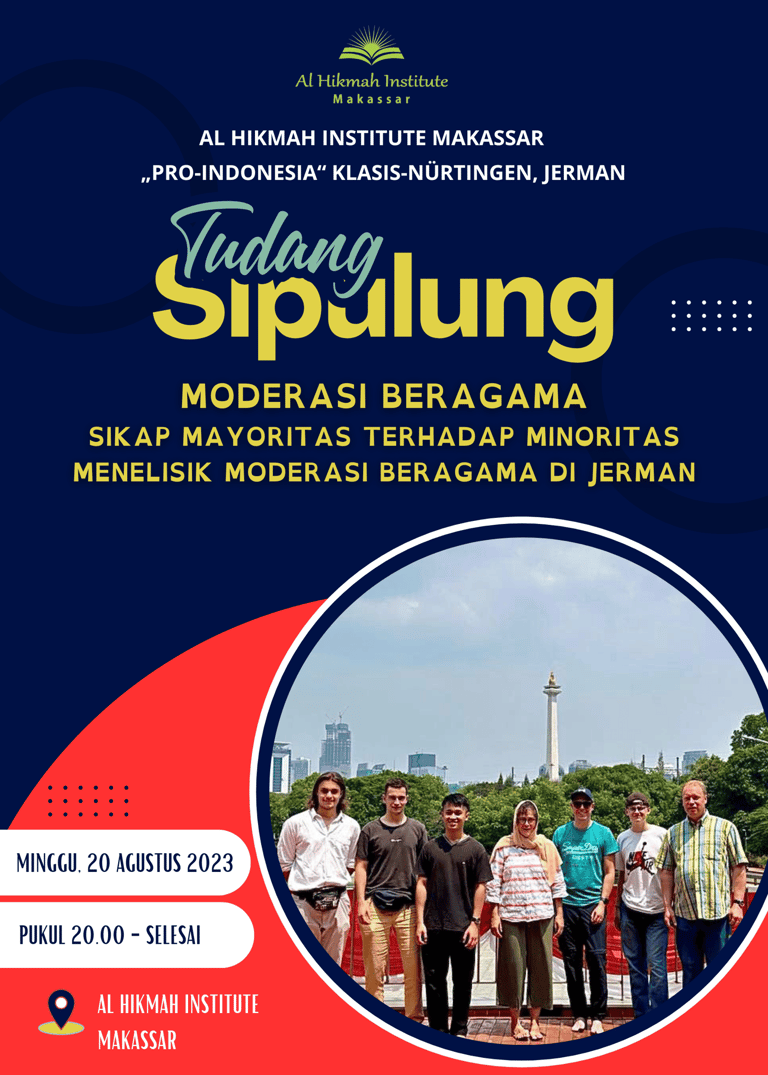
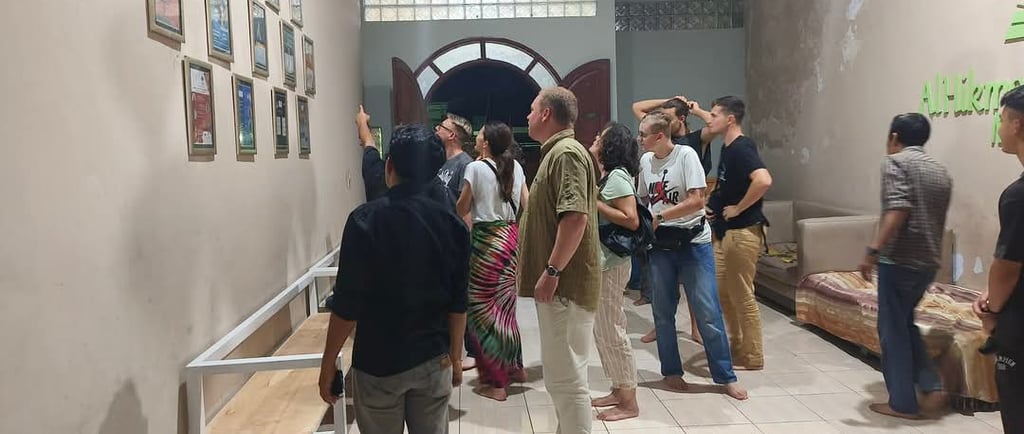
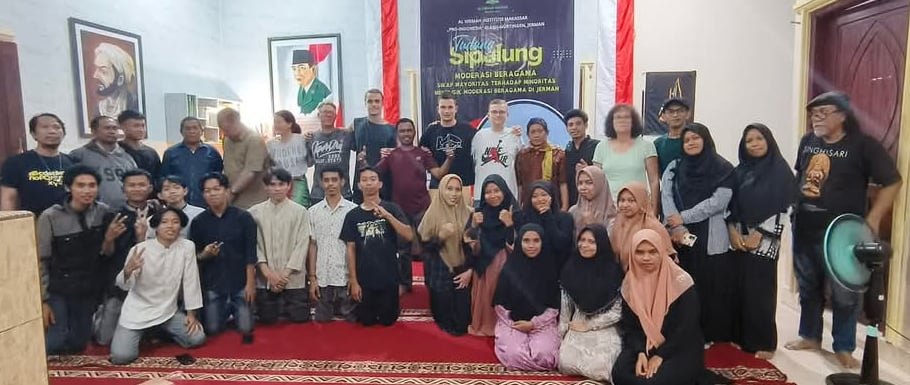
Makassar, August 20, 2023 — Al Hikmah Institute Makassar reaffirmed its commitment as a space for interfaith and intercultural encounters through the Tudang Sipulung forum. Held at the Al Hikmah Institute office, the event welcomed special guests from the Pro Indonesiam organization, Klasis-Nürtingen, Germany, under a timely and urgent theme: "The Majority’s Attitude Toward Minorities: Exploring Religious Moderation in Germany."
At a time when exclusivism and identity-based polarization are growing around the world, forums like this offer a refreshing space for meaningful dialogue.
The event was opened by Juliadi Solong, Director of Al Hikmah Institute, who warmly welcomed the German delegation. In his remarks, he emphasized the importance of expanding spaces for dialogue to break down prejudice and build bridges of humanity.
Interfaith dialogue is not new to Al Hikmah. The institution has long served as a hub for interfaith meetings, supported by key figures such as Reverend Diks Pasande, who serves as both mentor and instructor at the institute.
The forum atmosphere was warm and inclusive. The German delegation sat in a circle alongside students and local religious moderation advocates. Lydia Häussermann, head of the Pro Indonesiam delegation, was the forum’s first speaker.
She shared stories of how, both as individuals and as a community, they have built relationships with Muslims—particularly refugees from Lebanon and other Muslim-majority countries.
“Living side by side isn’t just the responsibility of governments or religious institutions,” she said. “It is a personal calling for every human being.”

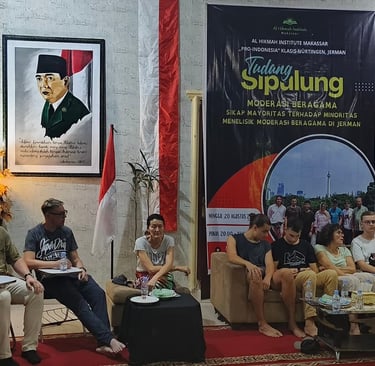
The discussion touched on many relevant issues, including challenges of integration, cultural differences, and expressions of faith in public spaces. But more importantly, the forum cultivated something that can’t be measured by data: mutual trust and a spirit of shared learning.
Tudang Sipulung is more than a discussion forum—it is a space for reflection. Here, diversity is not merely a sociological fact but a moral imperative. It challenges us not to stop at passive tolerance but to move toward active, enriching dialogue.
We learn that being part of the majority doesn’t mean dominating others, and being a minority doesn’t mean being sidelined.
The closing Q&A session revealed great enthusiasm from both sides. The conversation went beyond information-sharing and evolved into an exchange of empathy. Participants left with something invaluable: a renewed sense of hope that a more inclusive world is not a distant ideal, but a real possibility we can work toward together.
Forums like this must be sustained. In a world that is increasingly interconnected yet easily fragmented, nurturing dialogue means nurturing the future of humanity.
It is our hope that initiatives like Tudang Sipulung will not remain one-off events, but will grow into a broader cultural movement—engaging more sectors of society in both Germany and Indonesia.
Because in the end, difference is not a threat. It is a richness waiting to be understood, protected, and celebrated.