
Maluppa in Morowali: A Tradition That Endures Amid the Onslaught of Mining
How the traditional Maluppa ritual of the Bajo people in Morowali struggles to endure amid the rapid industrialization brought by nickel mining, reflecting the tension between cultural heritage and modern development.
FIELD NOTES & ETHNOGRAPHY
J. Solong
5/22/2025

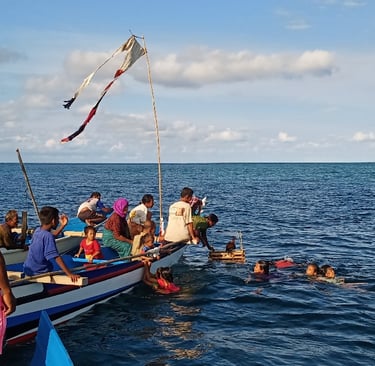
In the eastern corner of Sulawesi, specifically in Morowali, once lay a landscape adorned with tropical forests and vast blue seas. Today, that scenery has changed dramatically. The roar of mining machines, the constant flow of nickel-hauling trucks, and the glint of smelters have become the new symbols of what is often referred to as progress.
Yet behind the blinding lights of industrialization, a cultural heritage quietly struggles to survive: Maluppa.
Maluppa ka Dilao—which literally means “to release to the sea”—is a traditional ritual of the Bajo people, also known as the Sama ethnic group, who reside in Panimbawang Village, Bungku Selatan District, Morowali Regency. According to Hatta—a local son and former activist—maluppa is an expression of gratitude to nature, particularly the sea, through the offering of ritual gifts as a form of reverence.
More than a ritual, maluppa is steeped in sacred values. The accompanying norms serve as an invisible social fence. Violations are believed to invoke the wrath of sea spirits and bring deep shame upon the violators. For the Bajo indigenous community, shame is not merely an emotion but a moral compass that sustains harmony and shared values.
However, the relentless wave of mining development has ushered in new dynamics. The influx of migrant workers, a growing consumerist lifestyle, and an imbalance of power relations have gradually shifted traditional social structures. The once-prevailing culture of shame has begun to be replaced by a culture of competition and pragmatism. Among the younger generation, the measure of honor has shifted—from wisdom and virtue to salaries, gadgets, and lifestyles.
In such a climate, Maluppa seems to have become mere nostalgia. Beautiful in memory, yet rarely seen in daily life. When customary land is seized without indigenous consultation, communities lose more than just living space—they lose dignity. The social restraint once anchored by shame now feels ungrounded.
How can one still feel shame if tradition is no longer respected by those in power?
Yet, hope is not entirely lost. In several villages, traditional leaders and young locals are beginning to rise. They hold cultural dialogues, document ancestral stories, and even integrate maluppa values into informal education. Some activists have also initiated critical dialogue with mining companies, demanding that development not focus solely on economic gain but also prioritize cultural sustainability.
Morowali today mirrors many regions across Indonesia—caught at a crossroads between modernity and tradition. Amid the industrial clamor, Maluppa remains relevant. It is the voice of conscience, reminding us that true progress is not only measured by the scale of investment, but by how well we preserve the values that make us human.