Logic as the Foundation of Students’ Critical Reasoning in the AI Era
Highlights the importance of logic as the foundation of students’ critical reasoning in the age of artificial intelligence. Logic is emphasized as a comprehensive structure of thought essential for evaluating information, preventing overreliance on AI, and fostering a strong intellectual tradition among students.
KNOWLEDGE PRODUCTION
Siti Asma Ahmad (Al Hikmah Institute Felow)
1/18/2026
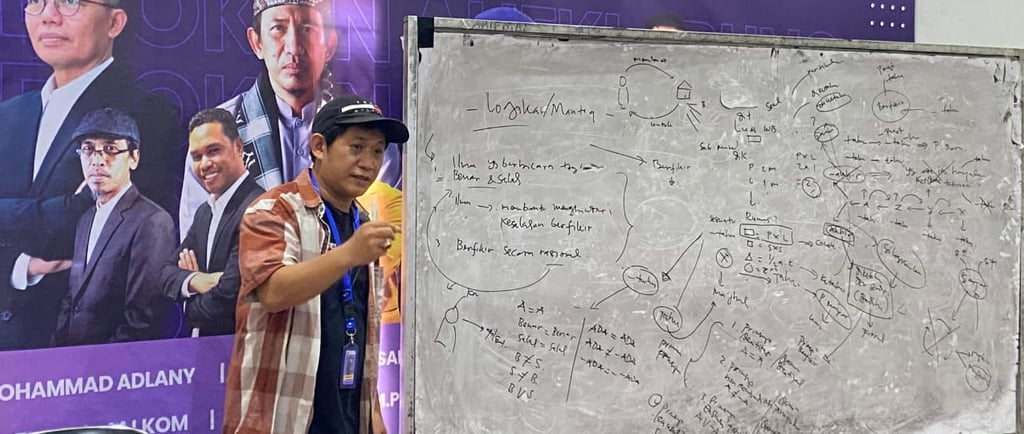
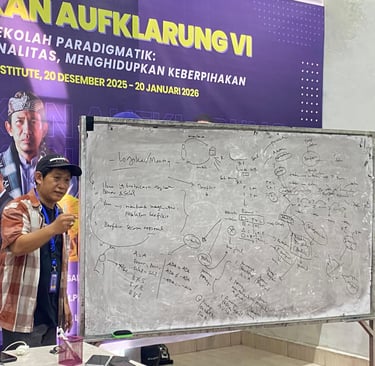
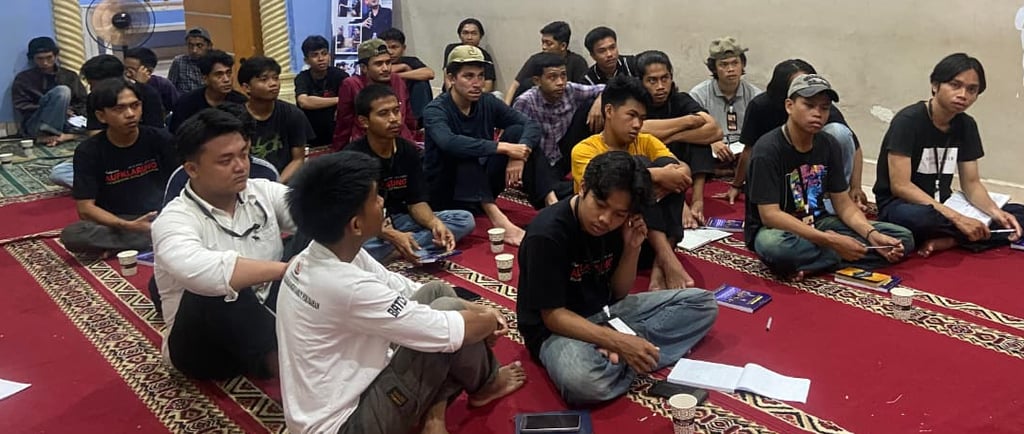
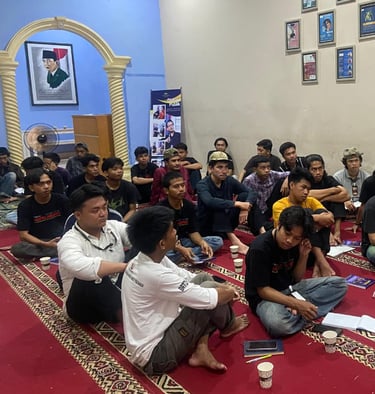
Amid the rapid flow of information and the advancement of Artificial Intelligence (AI), strengthening students’ logical reasoning has become an urgent necessity. This issue emerged during an interview conducted by the Al-Hikmah Institute Team with Andi Ashiem Amir, a member of the Steering Committee and a logic lecturer at the Short Course Padepokan Aufklärung VI, on Saturday, January 17, 2026.
The interview was conducted by Siti Asma Ahmad from the Al-Hikmah Institute team. Andi Ashiem Amir—widely known as Kanda Acim—is not only actively teaching at Al-Hikmah Institute Makassar, but is also a frequent speaker at various national academic forums, including as a lecturer at the National Level II Cadre Training (LK II) of Himpunan Mahasiswa Islam, particularly in Eastern Indonesia.
As a logic lecturer, Kanda Acim explained that logic cannot be understood partially. In logical studies, there is a strong interconnection between topics, systematically arranged and mutually reinforcing.
“Logic can be viewed both takwini and tadwini. From the tadwini perspective, it may already be widely applied, but from the takwini aspect—as awareness and a structure of thinking—it still needs strengthening. Therefore, logic cannot be selectively learned. It must be understood comprehensively to avoid contradictions,” he explained.
Responding to the current condition of students who tend to rely on AI and seek instant answers without prolonged thinking processes, Kanda Acim stated that AI is an undeniable reality. However, excessive dependence on it may weaken cognitive capacity and slow personal intellectual growth.
“AI should be understood as a tool that facilitates learning, not as a primary source that creates dependency. Logic remains highly relevant, because the quality of one’s questions is determined by how one thinks. The more critical the question, the more mature the reasoning,” he emphasized.
He further stressed that with strong critical reasoning, students can position AI merely as one source of knowledge, not as a replacement for the thinking process itself.
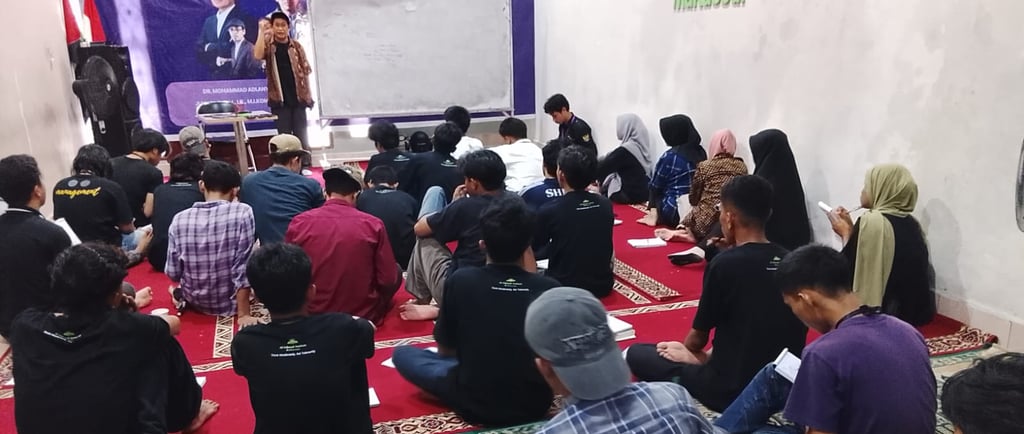
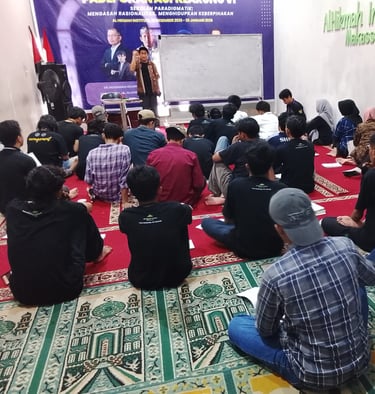
In the context of information overload—both factual information and hoaxes—logic, according to him, serves as the first step in verifying truth.
“When we are confronted with two conflicting pieces of information, logical principles help us understand that it is impossible for both to be simultaneously true or false. This awareness becomes the initial gateway to tracing the truth of the information,” he explained.
At the end of the interview, Kanda Acim delivered a message and hope to the participants of the Short Course Padepokan Aufklärung VI, encouraging them to continuously nurture discussion and literacy traditions. He hoped that the logic material acquired would not stop at a theoretical level but be applied in real-life contexts.
“Logic should become a ‘lens’ or paradigm for viewing and addressing problems in one’s respective environment. In this way, the process of intellectual and spiritual growth can proceed faster and in a more directed manner,” he concluded.