Focus Group Discussion as an Epistemic Space in Padepokan Aufklärung VI
Examines the use of Focus Group Discussion (FGD) as the core learning method in the Padepokan Aufklärung VI Short Course organized by Al-Hikmah Institute Makassar. Through an epistemological and dialogical approach, FGD serves as a space for cultivating students’ critical consciousness in response to literacy crises, information overload, and contemporary Islamic intellectual challenges.
KNOWLEDGE PRODUCTION
Siti Asma Ahmad (Al Hikmah Felow)
1/17/2026
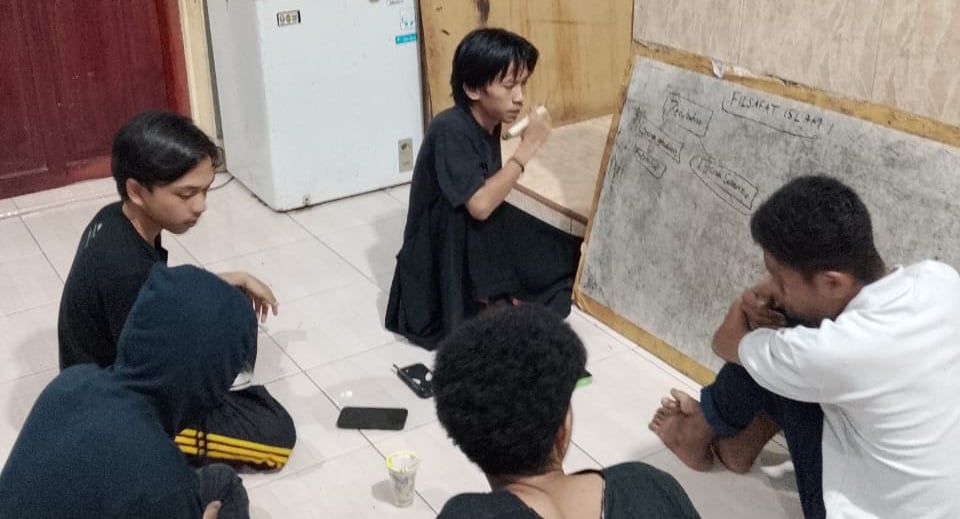
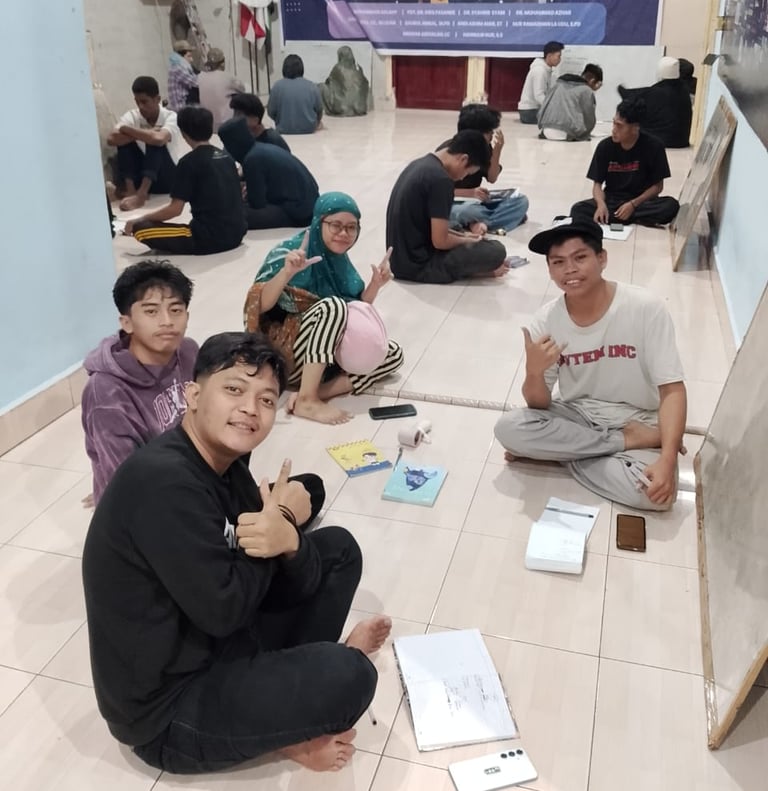
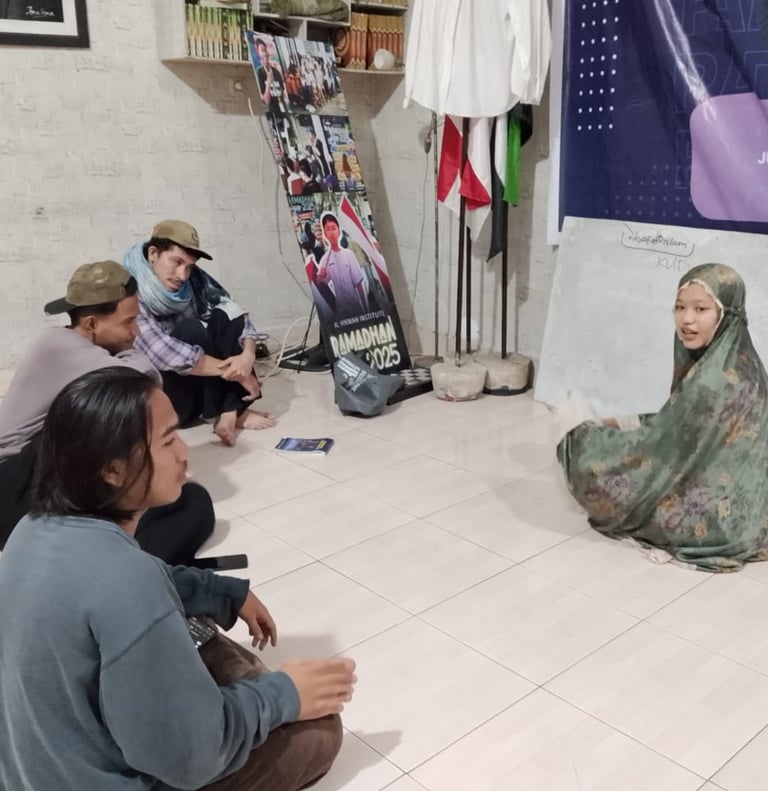
Focus Group Discussion (FGD) has become the core learning method in the Short Course of Padepokan Aufklärung VI, organized by Al-Hikmah Institute Makassar. This method is considered effective in responding to the literacy crisis and epistemic challenges currently faced by university students.
Miswar Abdullah, widely known as Kanda Miswar, serving as a steering committee member and lecturer on epistemology, explained that the learning design of Padepokan Aufklärung is deliberately structured. The method combines conceptual reinforcement, exploration of references, critical dialogue, and FGD as a space for articulating and testing ideas.
“Islamic thought does not emerge in a monologic space; it grows within a tradition of dialogue and scholarly debate (munāẓarah). Therefore, it requires the engagement of reason, existential experience, and intellectual honesty from participants,” Miswar said in an interview with the Al-Hikmah Institute team on Saturday (January 17, 2026).
According to Miswar, FGD plays a crucial role in shaping students as subjects of knowledge. Through group discussions, participants are trained to think independently, raise critical questions, and formulate their own perspectives, rather than passively receiving information.
Amid a world that is increasingly plural, fast-paced, and filled with complex issues, FGD is also seen as a bridge between theoretical concepts and contemporary practical realities. “Participants are expected not only to understand texts, but also to read contexts,” he explained.
In evaluating the effectiveness of the method, Miswar stated that the outcomes exceeded initial expectations. Participants’ enthusiasm, the depth of questions raised, and their courage in critically examining assumptions long considered established were key indicators of success.
“Participants are not memorizing intellectual discourses; they are bringing them to life,” he said. Nevertheless, he emphasized that the dynamics of discussion remain open to evaluation and improvement.
Miswar further noted that the epistemic development of participants is evident at several levels. Cognitively, students have begun to distinguish between normative doctrines and the historical dimensions of teachings, between revelation and interpretation, and between belief and its epistemological justification. In terms of intellectual attitude, participants appear more open-minded, less reactive, and less judgmental toward differences.
The courage to ask “why” and “how,” rather than merely accepting given claims, is seen as a sign of growing epistemic awareness—an essential core of Islamic intellectual orientation.
Regarding the relevance of epistemological studies, Miswar emphasized that such inquiry is increasingly vital amid information overload, the spread of hoaxes, religious and ideological polarization, and competing truth claims that negate one another.
“Without epistemology, religion can easily be reduced to emotion, slogans, or rigid ideologies rooted in blind imitation (taqlid),” he stated. Epistemology, he argued, functions to keep faith rational and responsible, while shaping a mature and dialogical way of being religious.
He added that an epistemological approach also prepares students to engage with developments in science, philosophy, and ever-changing socio-political realities.
Concluding the interview, Miswar delivered a message to the younger generation not to stop at merely inheriting religious teachings, but to become thinkers and guardians of their meanings.
“Dare to think critically without losing adab (ethical conduct). Study Islam as a path of meaning-seeking, not merely as an identity,” he said. He hopes that Padepokan Aufklärung will cultivate a love for truth, rather than a desire to win arguments. “Islam does not need the loudest voices, but the most honest minds, the broadest understanding, and the most responsible actions.”