Dicky Sofjan: It’s Time for Religious Communities to Open Up and Embrace Diversity
The public discussion titled "Mapping Contemporary Religious Thought" featuring Dicky Sofjan from the Indonesian Consortium for Religious Studies (ICRS) offered fresh insights into the importance of diversity, inclusivity, and interfaith dialogue.
NEWS & EVENTS
J. Solong
5/27/2025
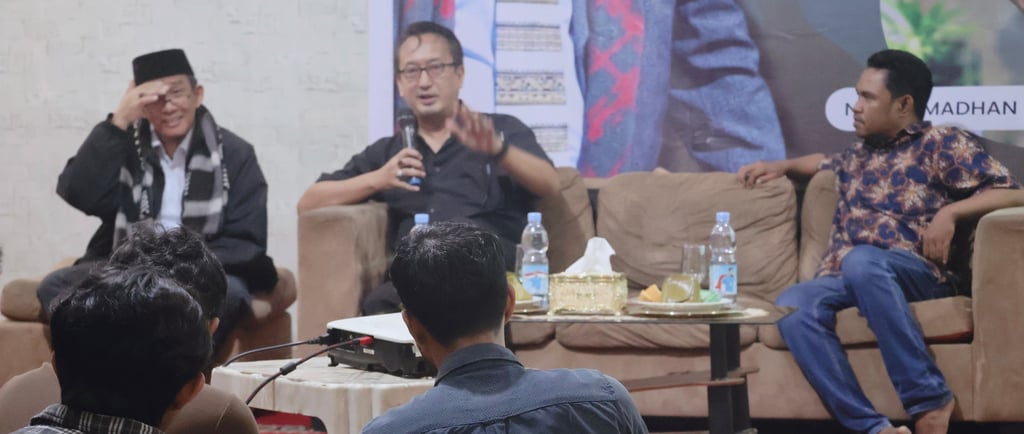
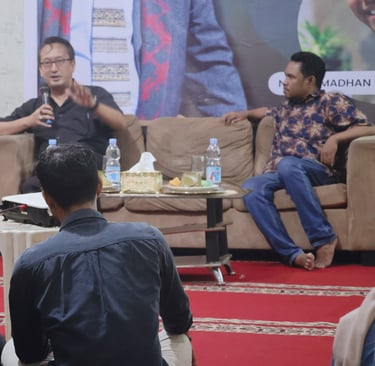
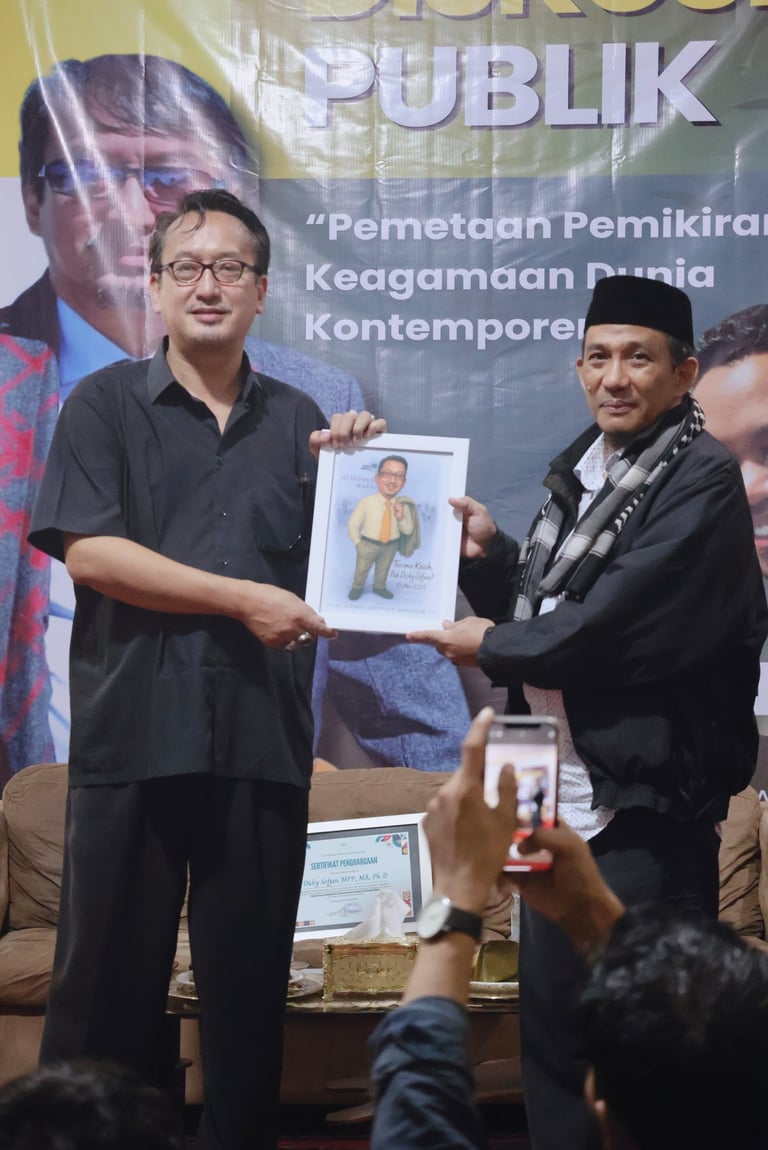
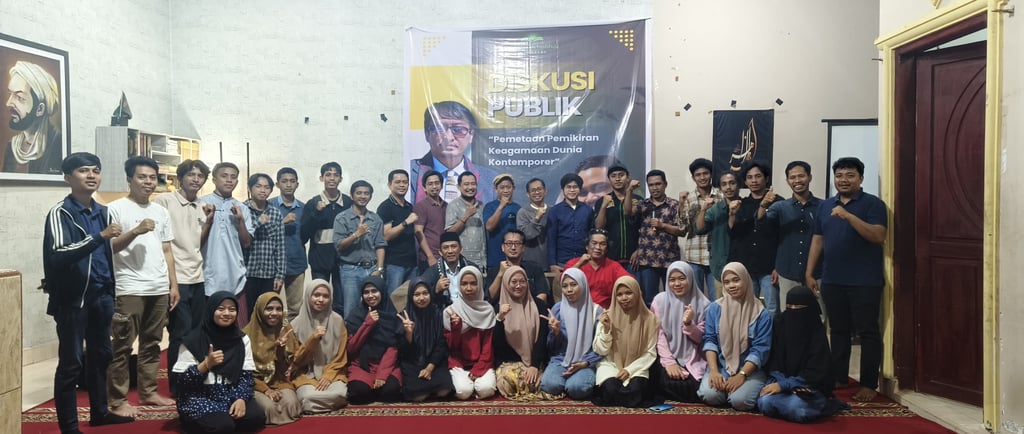
Makassar, Al-Hikmah — The Al Hikmah Institute Makassar held a public discussion titled "Mapping Contemporary Religious Thought" on Saturday (May 10, 2025), featuring Dicky Sofjan, a prominent scholar from the Indonesian Consortium for Religious Studies (ICRS), as the main speaker.
The discussion was moderated by Noer Ramadhan La Udu, a young academic known for his work in Islamic thought and diversity studies. With his warm and structured approach, Noer skillfully facilitated a vibrant and interactive session, bridging Dicky’s insights with critical questions from the participants.
The event, held in Makassar, was attended by activists, students, and lecturers from various educational institutions. In his presentation, Dicky emphasized the need for a new approach to religious life—one that is more open, inclusive, and dialogical.
“A prophet is inherently cosmopolitan—inclusive, critical, progressive, and futuristic,” said Dicky to the audience.
He stressed the importance of creating constructive spaces for interfaith encounters to foster deeper and more peaceful understanding.
Before delving into the main topic, Dicky shared his experiences living and studying in various countries such as the United Kingdom, the United States, Singapore, Japan, Iran, Italy, and Brunei Darussalam. According to him, cross-cultural experiences enrich one’s perspective in understanding the diversity of religious interpretations and practices.
He also highlighted the lack of attention within Islamic studies in Indonesia toward future-oriented issues such as ecological crises and technological advancements.
“In fact, the Qur’an and hadith are rich with eschatological orientation and future-thinking,” he noted.
With technological advances like big data analysis, he argued, humanity should be able to project the direction of civilization and assess the role of religion in addressing the challenges of the times.
In the forum, Dicky also shared his experiences engaging in dialogue with various interfaith groups, including the Mormon Christian sect in the United States. Although often considered deviant by mainstream Christianity, the Mormon community serves as a concrete example of interpretive diversity within a single religion.
“In America, churches are among the wealthiest institutions—even wealthier than major corporations. They are not taxed,” he explained.
Dicky also discussed a collaboration between Oxford University and eBay through the Skoll Centre, led by Jeffrey Skoll. This partnership explores the relationship between religion and law—an area he believes still contains many gaps.
“Many religious leaders lack a deep understanding of the law, and conversely, legal experts often neglect the role of religion,” he added.
He concluded his presentation by underlining the importance of addressing the issue of freedom of religion or belief on a global scale. This issue, he said, is especially relevant for minority groups that continue to face various forms of discrimination.
Dicky Sofjan’s visit to the Al Hikmah Institute was not his first. During a previous trip to Makassar, he also served as a speaker at a similar forum. His broad insights and fresh perspectives continue to be appreciated for bringing renewed understanding of religiosity in the contemporary era.