Democracy Considered Increasingly Devoid of Conscience, Youth Encouraged to Take a Critical Role
A public discussion organized by Al-Hikmah Institute Makassar in collaboration with the Centre for East Indonesian Studies (CEIS) as part of the Aufklärung VI short course series critically examined the growing erosion of moral consciousness in Indonesia’s democratic practices.
POLICY BRIEF & ADVOCACY
J. Solong (CEIS Makassar Activist)
1/8/2026
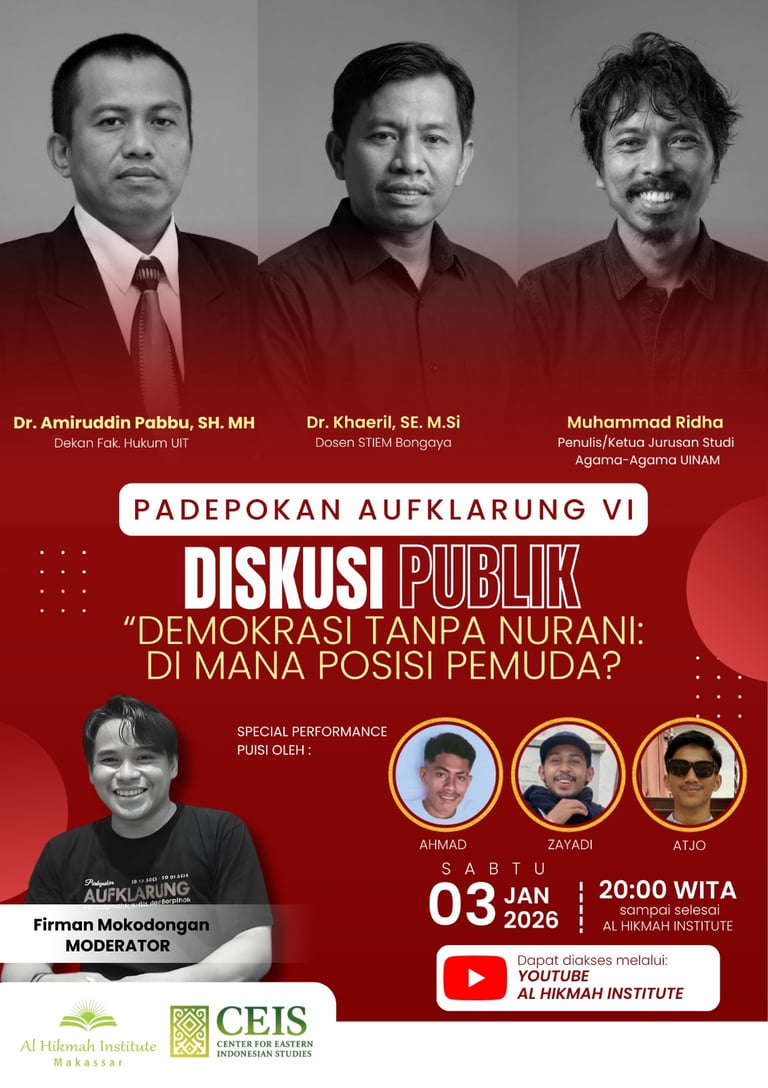
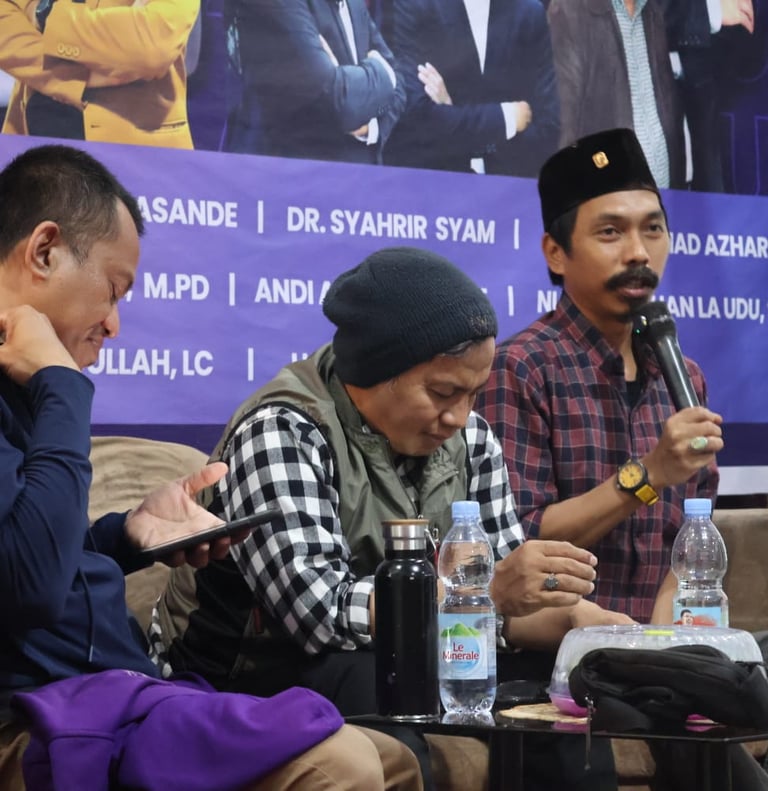
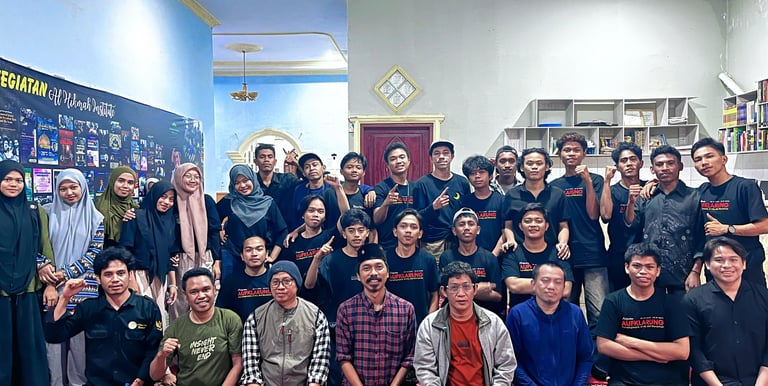
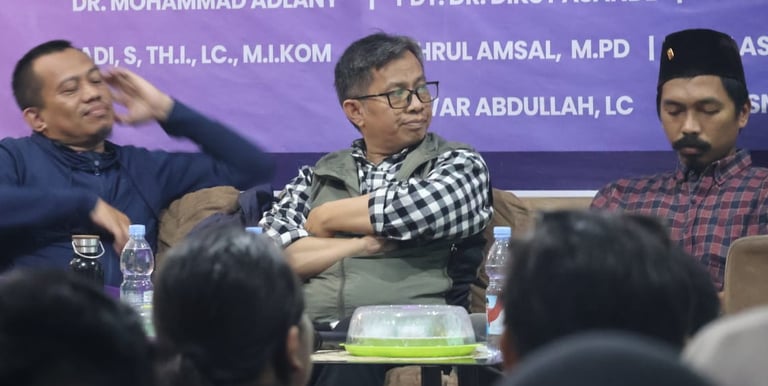
Al Hikmah Institute Makassar, in collaboration with the Center for Eastern Indonesian Studies (CEIS), held a public discussion titled “Democracy Without Conscience: Where Do Youth Stand?” on Saturday (January 3, 2026). The event was part of the ongoing Padepokan Aufklärung VI short course series.
The discussion highlighted concerns over the condition of Indonesian democracy, which is considered to be increasingly drifting away from moral ideals and social justice. According to the speakers, democracy is often reduced to mere electoral procedures, resulting in the loss of its ethical dimension.
In his opening remarks, Andi Ashim Amir, a board member of Al Hikmah Institute Makassar, emphasized that democracy should not be understood solely as a legal mechanism or as the accumulation of votes in parliament. “Democracy is not merely legal documents or vote counts. Democracy is a national ideal, a commitment to truth, and a defense of justice,” he stated.
He added that the growing dominance of political pragmatism has eroded the substance of democracy. Therefore, public discussion forums are considered essential to reaffirm the strategic position of youth, who demographically play a significant role in every democratic contestation.
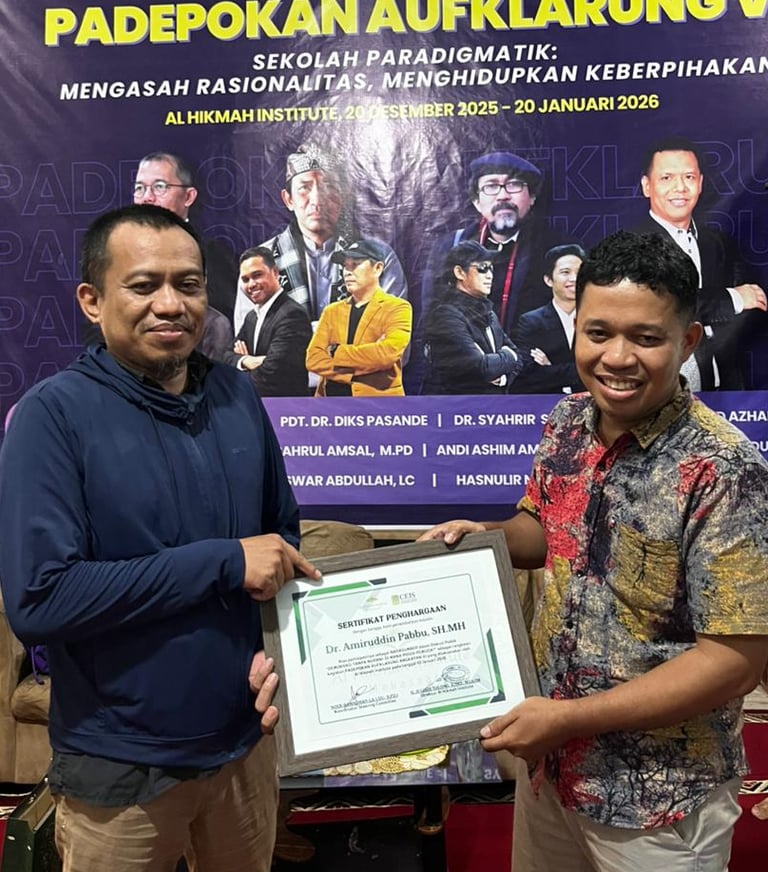
As the first speaker, the Dean of the Faculty of Law at the University of Eastern Indonesia (UIT), Dr. Amiruddin Pabbu, S.H., M.H., highlighted the challenges facing law enforcement in Indonesia, which he argued still faces many unresolved issues. He noted the wide gap in understanding between the public and law enforcement officials, as well as among legal practitioners themselves.
“Among legal practitioners, there is a joke that a judge’s verdict largely depends on what he had for breakfast,” Dr. Amiruddin remarked, illustrating the problems of inconsistency and subjectivity in law enforcement. He also pointed to the unresolved tension between positive law and social norms, which continues to fuel debates over legal practice in Indonesia.
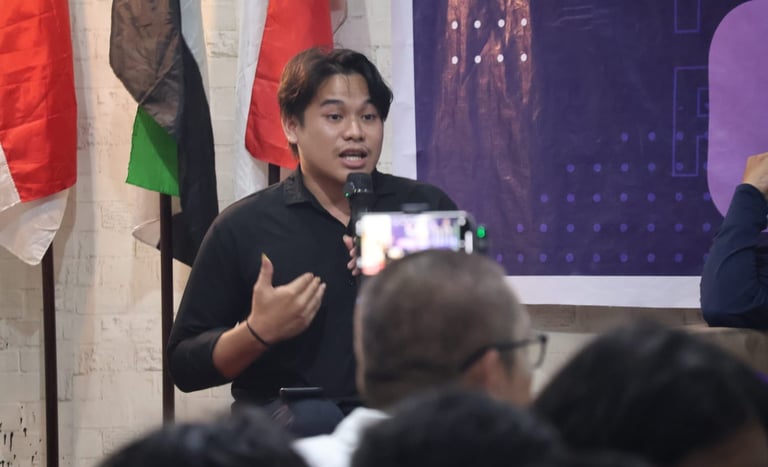
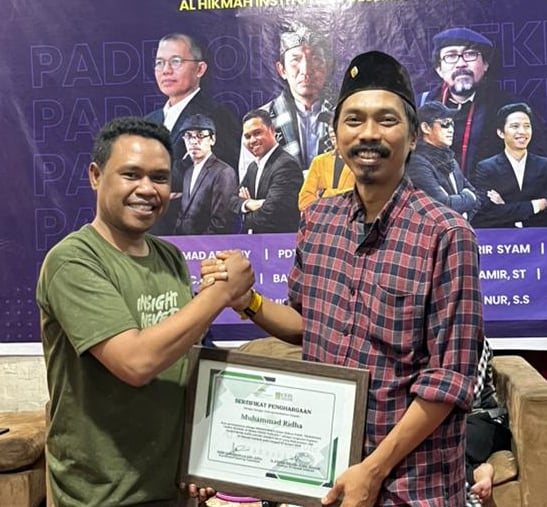
In another session, the second speaker, Muhammad Ridha, S.Hi., M.A., a writer and Head of the Department of Sociology of Religion at UIN Alauddin Makassar, examined democracy from a political economy perspective. He argued that economic inequality is one of the main factors constraining Indonesian democracy.
Ridha presented findings from his research on the accumulation of wealth among the 20 richest individuals in Indonesia based on Forbes data. According to him, the total wealth of this group is equivalent to the annual income of approximately 21 million workers when calculated using Jakarta’s minimum wage standard. “This condition shows a serious inequality gap,” he stated.
He even described Indonesian democracy as a “pseudo-democracy,” comparing it to democratic practices during the New Order era. At that time, elections were still held with participating political parties, but the winners could be predicted long before election day.
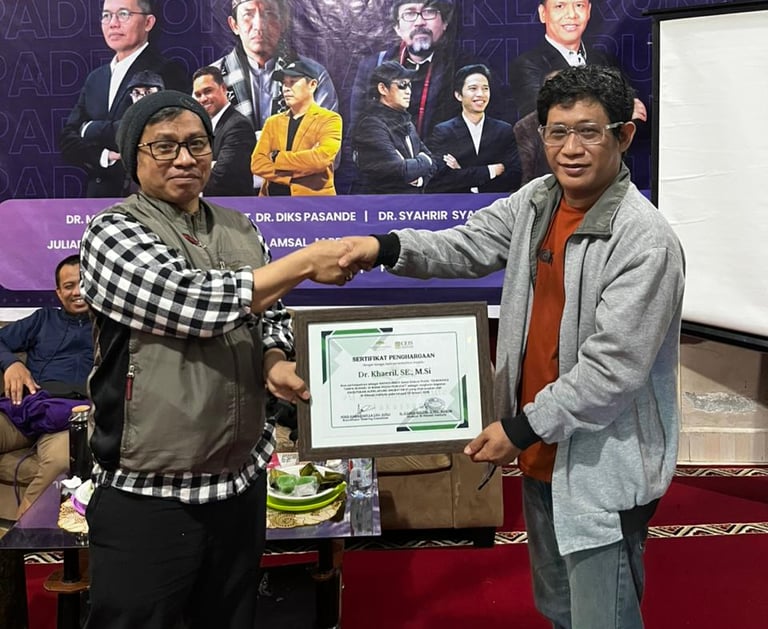
Meanwhile, the third discussant, Dr. Khaeril, S.E., M.Si., explored the philosophical foundations behind the founding fathers’ choice of democracy as the state system. He emphasized that when democracy is controlled by capital and political image-making, the constitution risks losing its meaning as a guiding framework for leadership.
“When wealth is concentrated in the hands of a small elite, inequality becomes a serious threat to justice and democracy,” he stated. He added that while law may legitimize policies, ethics remain essential in evaluating the direction of power. Therefore, the state is seen as needing institutions that function to safeguard conscience in governance.
The discussion is expected to foster critical awareness among youth, encouraging them to take an active role in nurturing a democracy grounded in justice, ethics, and the supremacy of law.